The Kolkata case is now beginning to resemble the infamous Nirbhaya case of December 2012, which involved the gang rape and fatal assault of a physiotherapy intern. The incident triggered massive nationwide protests, eventually bringing down the ruling national coalition led by the Congress Party.
Banerjee is the leader of the All India Trinamool Congress Party (AITC), which controls the government in West Bengal, whose capital is Kolkata. The AITC has been one of the chief opponents of the national ruling BJP.
On Tuesday, India’s top court criticised the AITC-led government for its sloppy approach over the August 9 incident. In an observation, the court said “it appears [the] crime was detected in the early hours, [and the] medical college principal tried to pass it off as suicide”.
Sandip Ghosh, who recently resigned as the principal of RG Kar Medical College and Hospital, where the crime occurred, was initially reassigned to another college after the incident, inviting public scrutiny. Ghosh has previously faced corruption allegations.
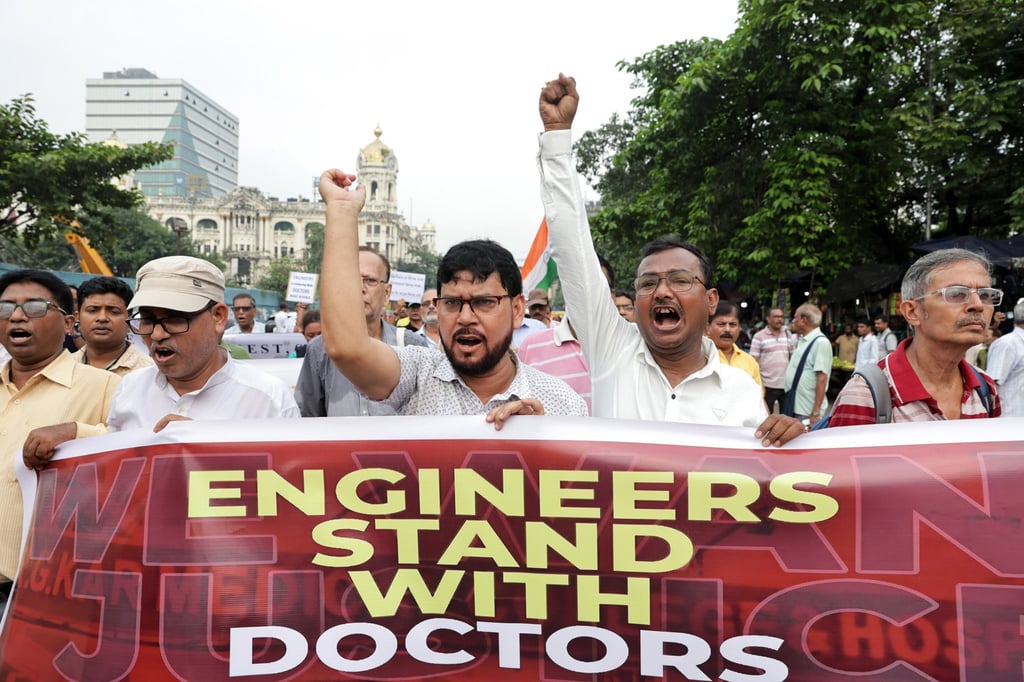
The conduct of authorities also raised suspicions after a mob entered the college premises around midnight on August 14 and vandalised the scene of the crime, raising questions whether it was orchestrated or an expression of outrage by protesters.
The apex court also called out authorities for an hours-long delay in the police registering an official complaint, which is an essential part of conducting investigations.
“Mamata did not act immediately after the rape. Now a lot of her party members appear to be upset with her,” Nag said. At the same time, he underscored that it won’t be easy to replace Mamata who has almost single-handedly powered the Trinamool Congress. “She is virtually running a one-man show.”
Banerjee started her political career in the seventies with the student wing of the Congress Party and left in 1998 to launch the party.
Banerjee established herself as a feisty woman political leader, known for her modest lifestyle, living in a single-storey house next to a dingy lane in Kolkata and always dressed in an inexpensive white cotton sari.
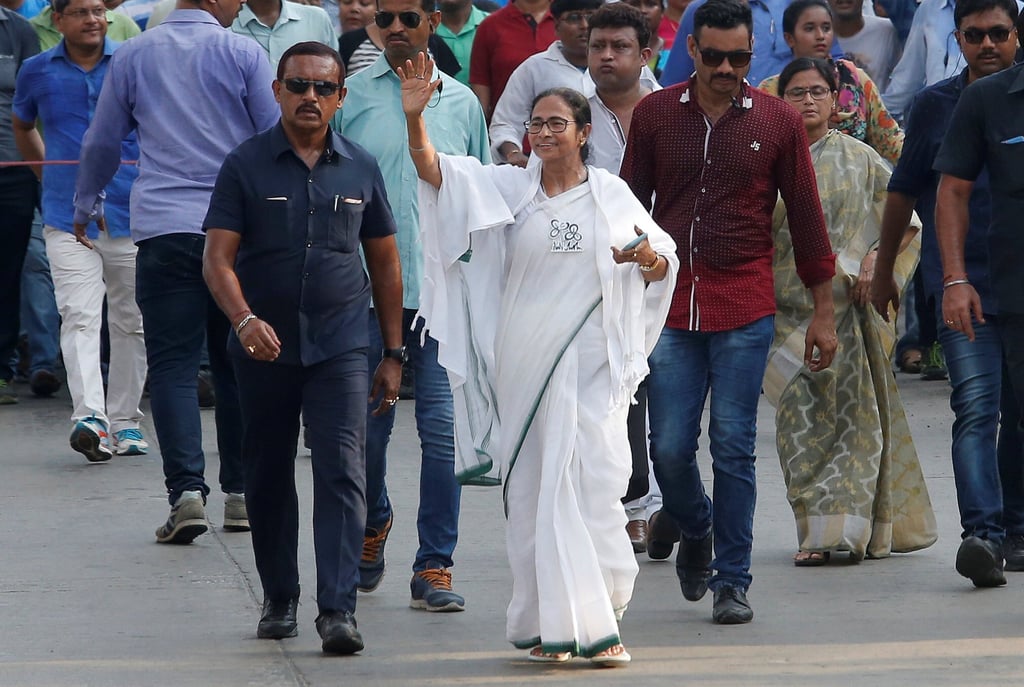
The seven-time member of India’s parliament successfully carved out a political niche by outlining a vision of development that connected to the deep resentment among the middle classes and unemployed youth in the province by promising jobs and development opportunities.
But the protests over the Kolkata rape and murder victim mask a deeper anger and frustration with her regime that has failed to deliver on many promises, analysts say.
Pratip Chattopadhyay Nadia, professor at University of Kalyani, said complaints against Banerjee’s regime have grown because the education sector is in disarray, and promises to strengthen the public hospital network have not been fulfilled.
“Women’s grievance have been there since the first day of her government, including past incidents of rape,” he said, alluding to events such as the rape of a minor in the state’s Nadia district. Banerjee reportedly raised questions whether the girl might be in love, and if she was pregnant.
But Banerjee has always managed to remain one step ahead of political opposition, he said.
The state’s political opposition including the BJP and the Left Front appear to be instigating the protests, but they lacked a political leader who can match Mamata, he said.
“Only coming out on streets won’t stop Mamata Banerjee. There should be a political leader who can take it forward to its logical conclusion, but nobody is there to take the onus,” Chattopadhyay said.
To deflect the opposition, he pointed out that Banerjee organised a protest against the rape and murder of the Kolkata doctor that may indirectly give the impression to masses that her administration was not responsible, and she empathised with the public.
But regardless of the moves, the incident is bound to taint Banerjee, analysts said.
03:18
‘I hope he gets the harshest punishment’: father of murdered Indian doctor demands justice
Blow to India’s opposition
“Things can go wrong if she does not handle it carefully. What we are seeing is public anger, which is an unknown dynamic at this stage,” he said. “It may have repercussions”
Others said the incident may not have a lasting impact, especially since national elections are over, and state elections are two years away.
“There is no crisis of law and order in the entire state, and she has a legislative majority. It is hardly anything that warrants imposition of presidential rule,” Nilanjan Mukhopadhay, an independent political commentator, said, adding that any such move could plunge the state into turmoil.
But the ongoing agitation underscored that Banerjee has to evolve into an astute administrator, he added.