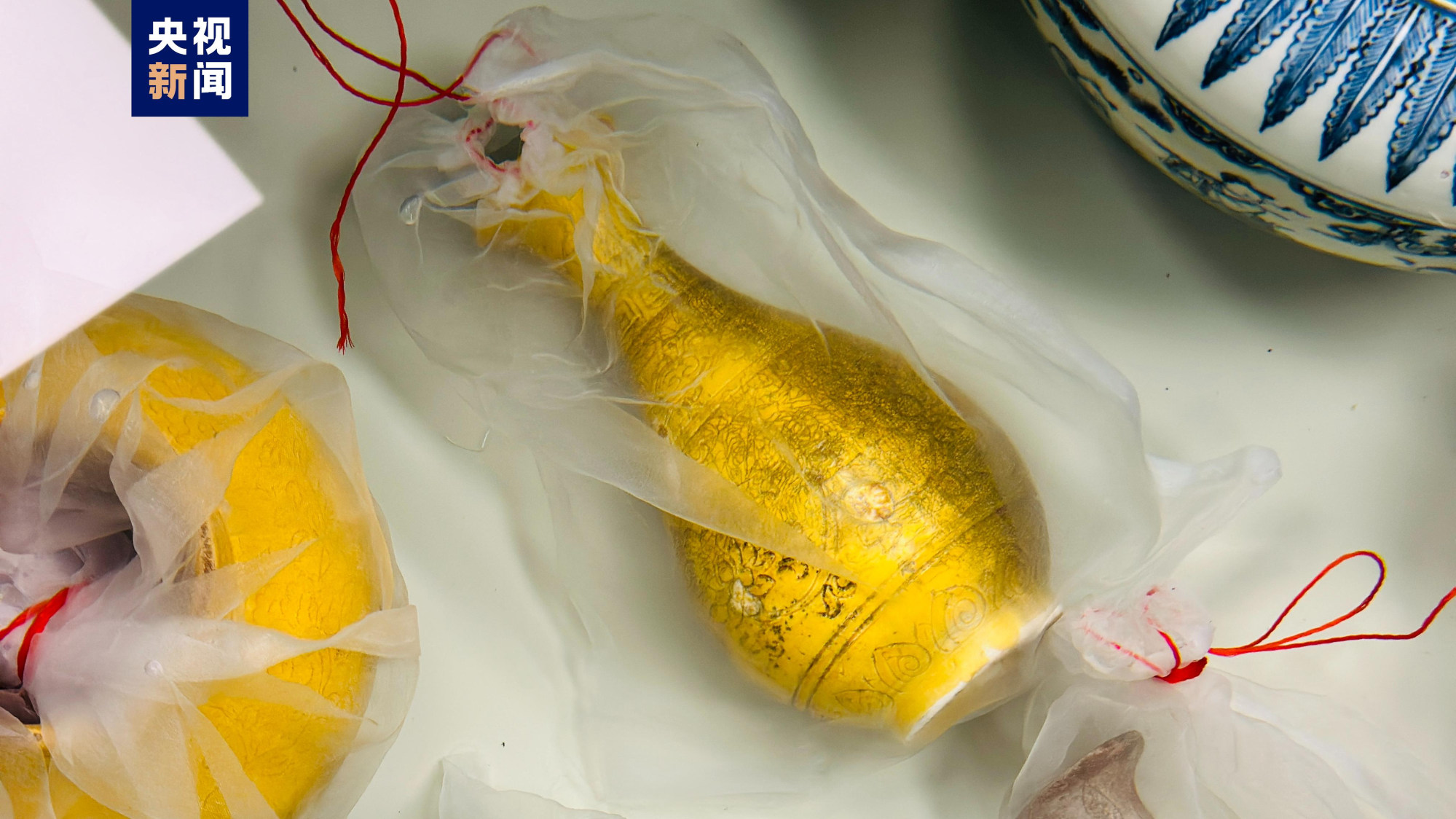
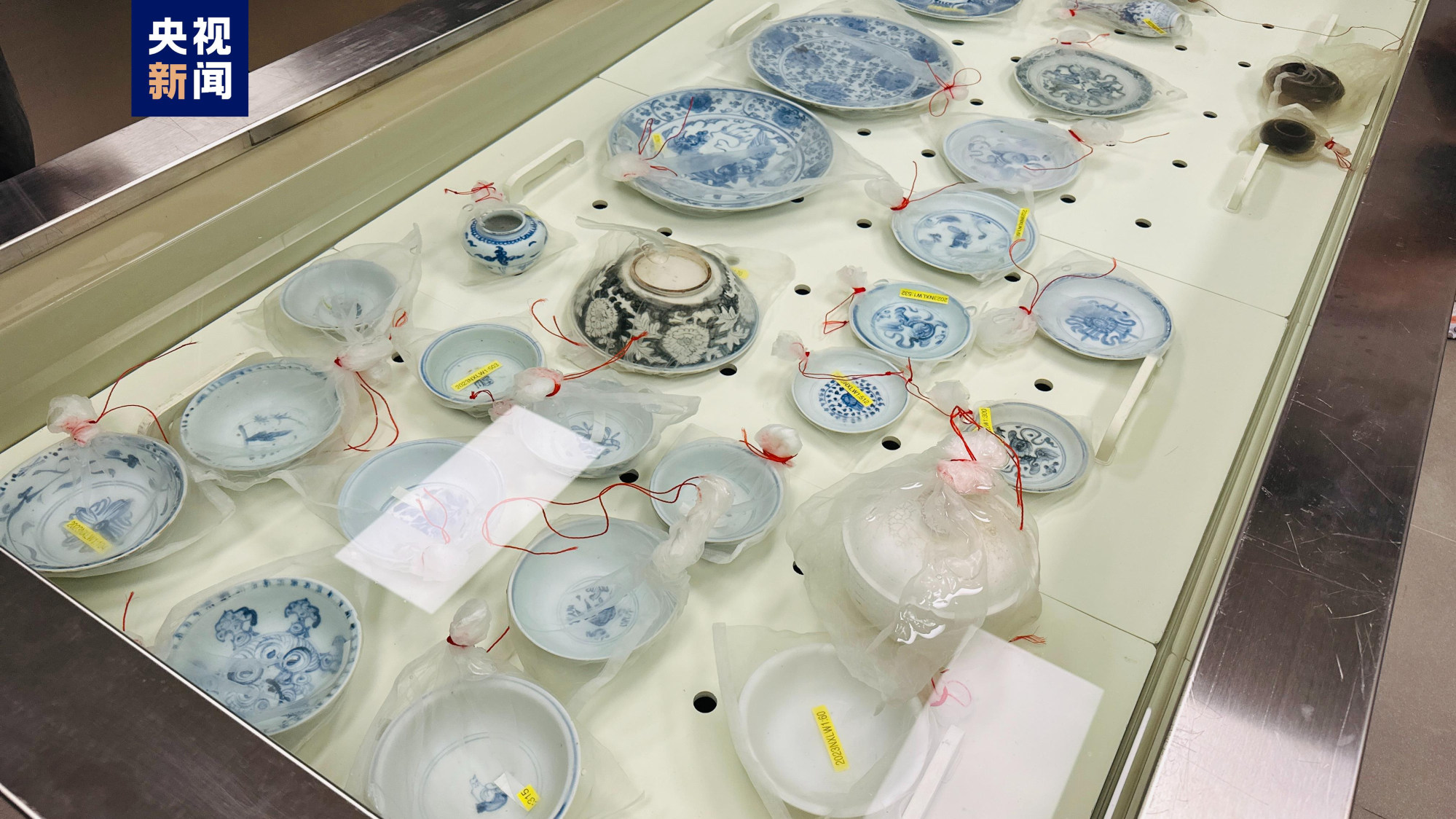
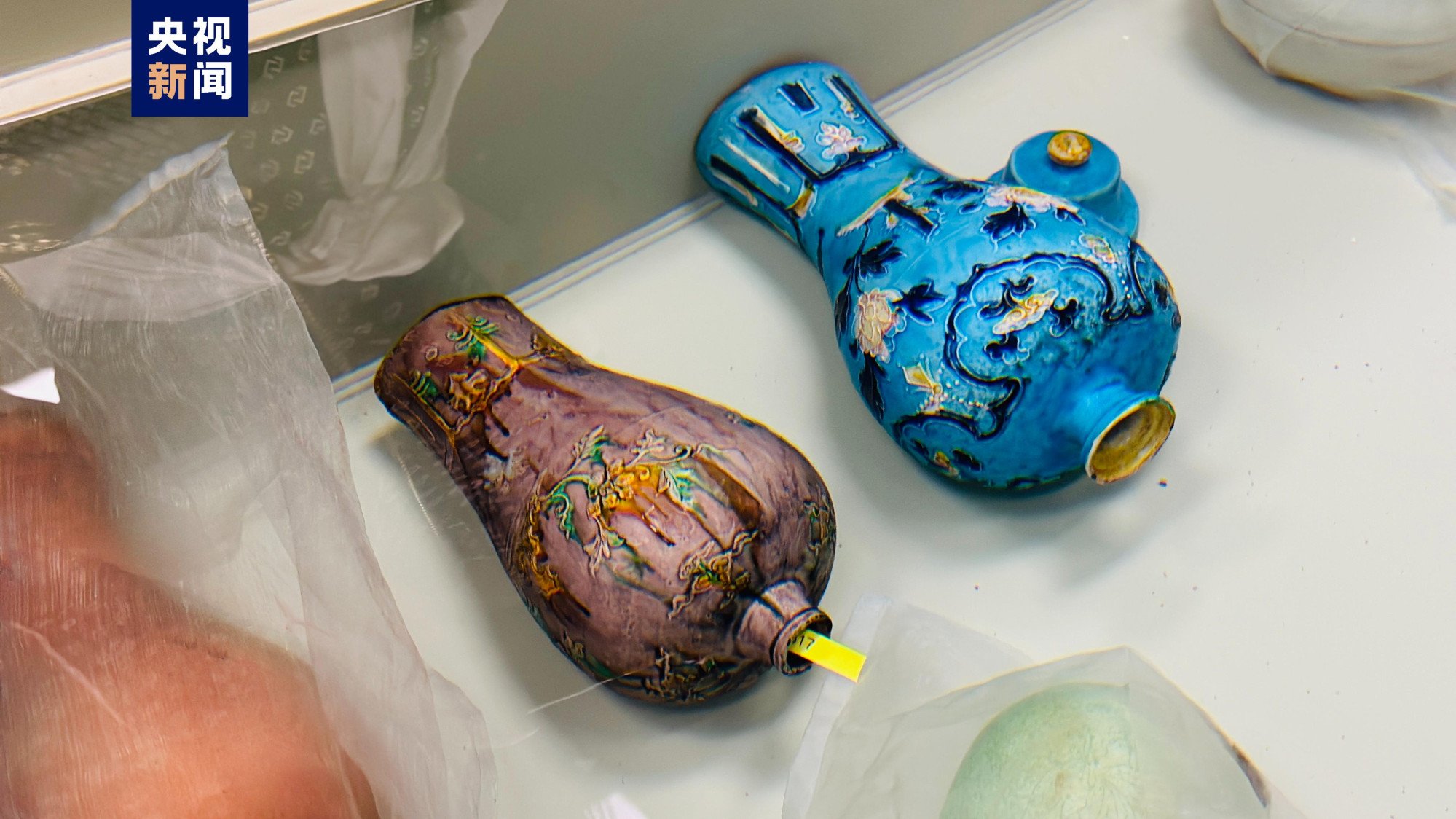
At the No. 1 shipwreck, 890 objects were recovered – including porcelain, pottery and copper coins – out of a total of more than 10,000 items identified at this site, the NCHA told a press conference on Thursday.
The researchers said the vessel’s cargo originated from the porcelain capital of Jingdezhen and was intended for export.
A total of 38 artefacts were recovered from the No. 2 shipwreck, including ebony logs from the Indian Ocean region, porcelain, pottery, shells and antlers.
That vessel had been returning to China when it sank, according to an October 2023 article in the Guangming Daily, written by Song Jianzhong, a researcher with the National Centre for Archaeology.
The two sites were jointly investigated by the National Centre for Archaeology, the Chinese Academy of Science, and a local museum in Hainan using both manned and unmanned submersibles.
The scientists used flexible manipulator arms attached to the submersibles to retrieve the artefacts and collect seabed sediments, according to state broadcaster CCTV.
A 3D laser scanner and high-definition cameras were also used to record the distribution of the shipwreck areas.
The NCHA said the discoveries were a milestone in China’s underwater archaeology, from coastal areas to the deep sea.