“There are many SEZs in the world … the difference here is that we are very close together. We have been neighbours for a long, long time. We have got the willingness and the commitment of the political leaders to make this work.”
After signing an MOU on the SEZ in January, both countries are tipped to ink the deal later this year at their annual bilateral Leaders’ Retreat.
Investors were sanguine about the project but said various hurdles still needed to be overcome.
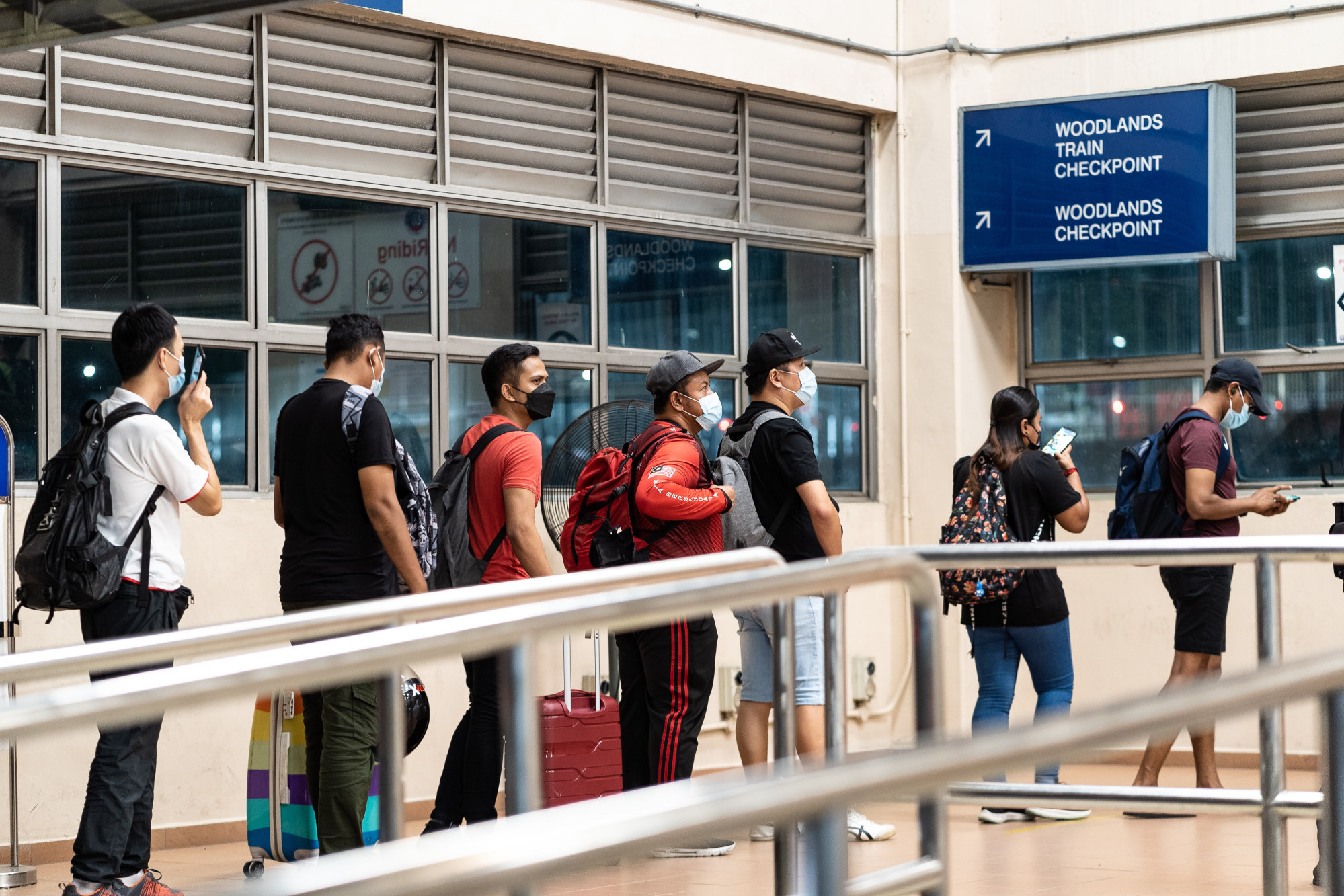
In relation to easing cross-border people movement between Singapore and Johor, 160 Singaporean businesses that responded to an SEZ survey organised by the SBF said there should be special immigration lanes for people working in the SEZ and streamlined customs and border clearances using passport-free QR codes or biometrics, as well as digitised cargo clearance.
It should not be “three hours in and three hours out”, business leaders at the SBF event on Thursday said, referring to the cross-border commute time.
The Kuala Lumpur-Singapore High Speed Rail (HSR) project to enhance last-mile connectivity within the SEZ should also be revived, they said.
The HSR project was postponed several times due to political volatility in Malaysia before it was finally terminated in 2021, with Malaysia paying S$102.8 million (US$76.5 million) in compensation.
Business leaders also suggested salaries and work regulations be harmonised in order to be more attractive to workers from both sides, that is, to attract more Singaporean talent to work across the border and find better skilled workers in Johor.
There should be less red tape in custom clearances of goods between the two countries and tax and tariff policies, and more ease in obtaining investment permits in either country, the survey said.
About 60 per cent of businesses also wanted a “joint investment promotion agency” to market the SEZ, while others called for more tax incentives, the survey found.
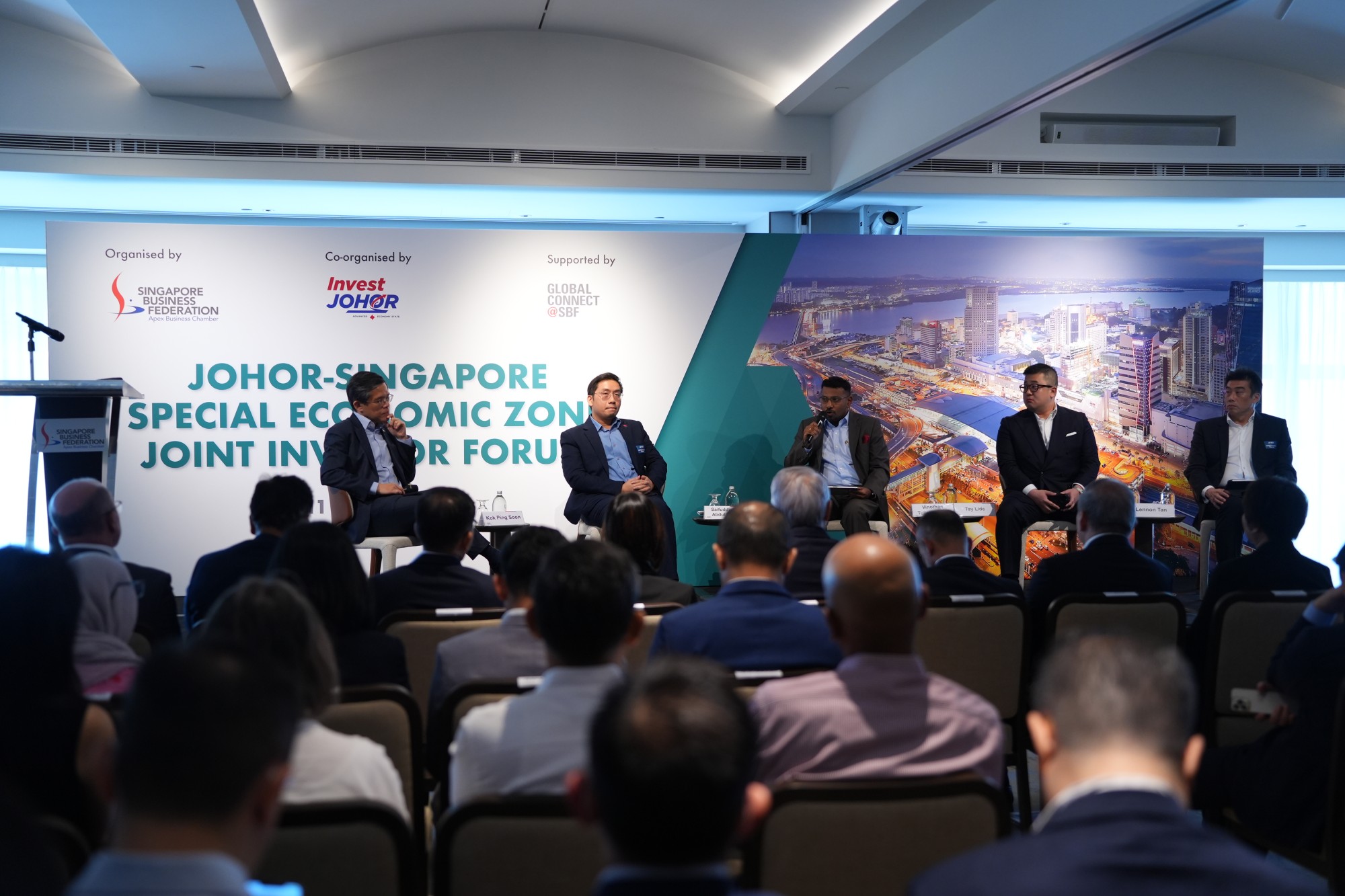
When asked if the SEZ felt like “déjà vu”, chief executive of Johor Economic, Tourism and Cultural Office in Singapore Saifuddin Bin Abdul Rahim said there was strong all-round support this time for the project from both the Malaysian federal and Johor state governments as well as the Singapore authorities.
Singapore and Johor have embarked on similar projects in the past, such as the Indonesia–Malaysia–Singapore growth triangle established in 1994.
Saifuddin said the Johor government in particular was very open to investments, citing deals that had been signed quickly, including data centre investments.
The Singapore government was equally enthusiastic, said Brian Ng, assistant vice-president of CapitaLand Development in Singapore.
Ng, who also signed data centre deals in Johor, said the pandemic had brought the two countries closer.
“I dare to say that, in the last 12 years, the relationship between Singapore and Malaysia now is the strongest we have ever seen,” he said.
Tay Lide, deputy director of Southeast Asia and Oceania at Singapore’s Ministry of Trade and Industry, agreed with the sentiment, citing Singapore’s keenness in discussing building more transport hubs and infrastructure to connect the Singapore-Johor checkpoints to key industrial areas in the SEZ.
The project also holds promise as Iskandar Malaysia, which will be part of the SEZ, is already developed and thriving, according to Vinothan Tulisinathzan, director of the Malaysian Investment Development Authority in Singapore.
“Iskandar is an area that already has strong infrastructure … so we’re not starting from scratch. Now you put improvements there, seamless movement of goods and coupled with tax incentives, that would really attract businesses and investors to be in the SEZ,” he said.
With many businesses now focused on diversification and “internationalisation”, given the threat of geopolitical tensions, the opportunity to do so in the SEZ, which is close to home for both countries, is a “big value proposition”, according to Lennon Tan, chairman of the Singapore Manufacturing Federation.
“We can see that both sides of government have really put on a very determined front that we will make this work. I think as businesses, we are encouraged,” he said.